
Wind Damage Roof Repair in Fort Worth, North Fort Worth, and Northeast Tarrant
Signs of Fort Worth wind damage
Fort Worth wind damage can break shingle seals, crease tabs, loosen ridge caps, or open flashing without leaving obvious debris. Therefore, a complete inspection should look beyond missing shingles.
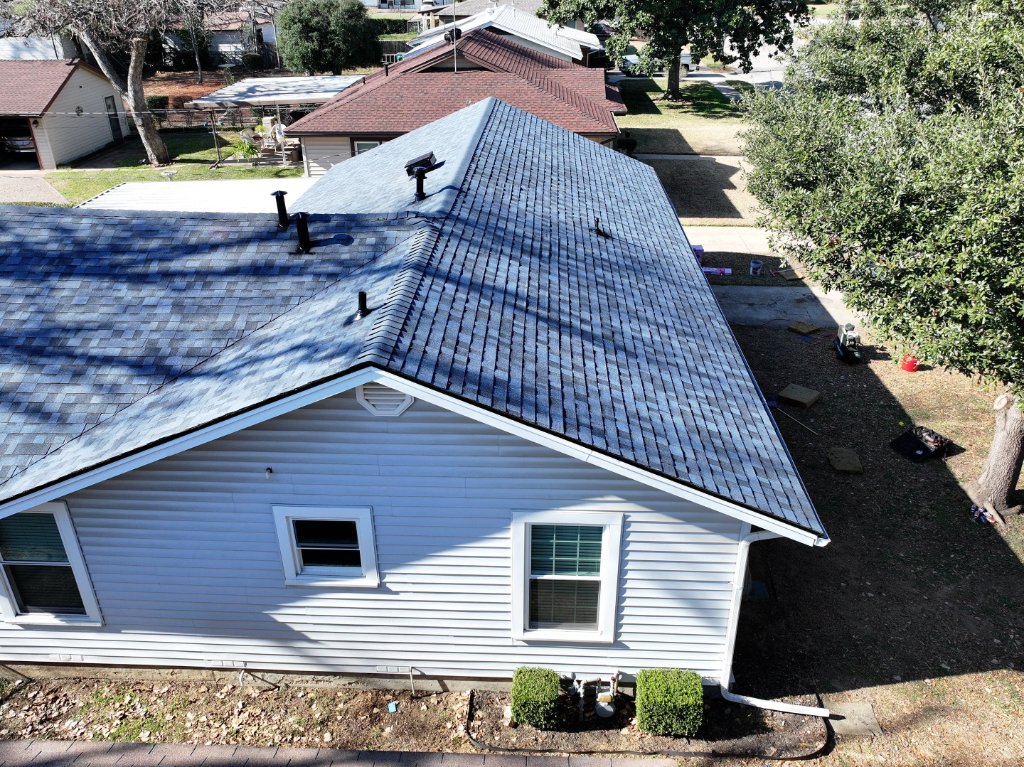
Monitor local storm information through the National Weather Service Fort Worth office. Then request a free roof inspection or call 817-898-7175.
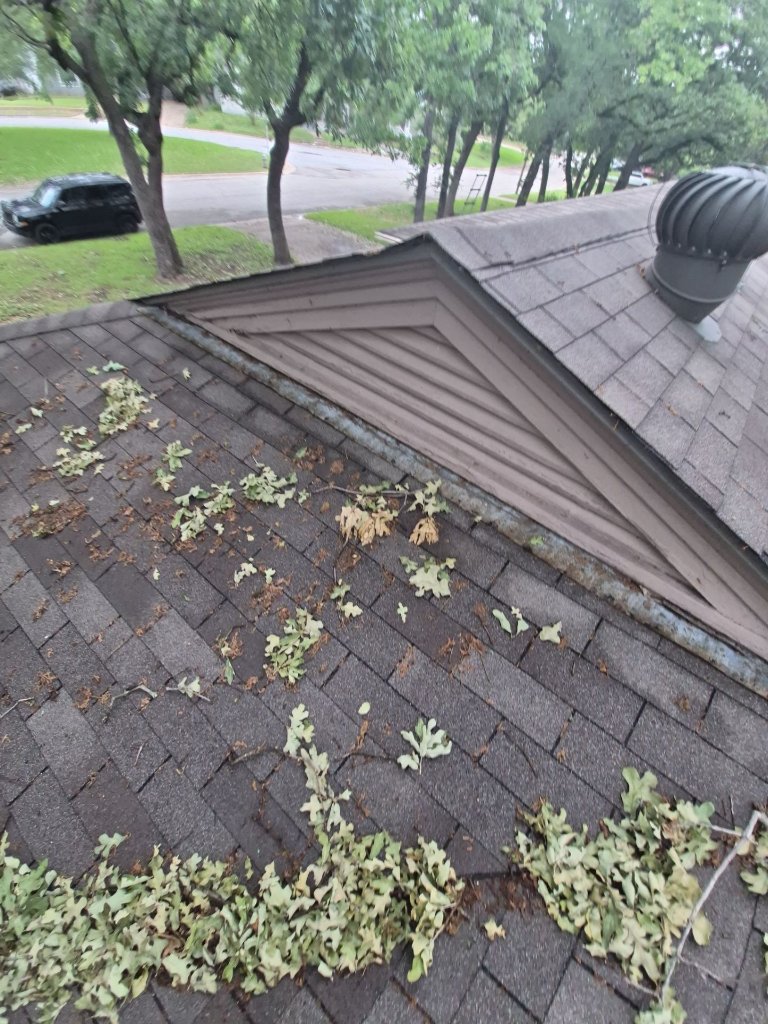
Storm damage and displaced roofing material in North Fort Worth after the April 2026 severe weather event. High winds can lift shingles without tearing them off entirely ? making damage harder to spot.
Table of Contents
- Why Wind Damage Is the Most Underreported Roof Problem in Fort Worth
- How High Does Wind Have to Be to Damage a Roof in North Texas?
- Warning Signs of Wind Damage You Can Check From the Ground
- The Hidden Wind Damage Homeowners Miss Most Often
- What to Do Immediately After a Wind Event in Fort Worth
- Does Homeowners Insurance Cover Wind Damage in Texas?
- Repair vs. Replacement After Wind Damage
- Why Fort Worth Homeowners Work With Becker Roofing and Exteriors
- Frequently Asked Questions
Wind damage is the roofing problem Fort Worth homeowners most often discover too late. Unlike hail ? which shows up in weather alerts and is easy to tie to a specific storm date ? wind damage often unfolds in slow motion. A shingle gets lifted in a 60 mph gust. The seal breaks. The shingle lies flat again and looks fine from the driveway. Six months later, water is coming through the ceiling, and the original storm date is hard to document.
In 2026 alone, Fort Worth and the surrounding Tarrant County area have seen multiple significant wind events. The April 25-26 supercell brought straight-line winds of 89 mph in Springtown and produced an EF-2 tornado near Runaway Bay and an EF-1 near Springtown ? wind gusts severe enough to strip shingles, displace ridge caps, and damage flashing systems across a wide swath of Northeast Tarrant County (NWS Fort Worth, April 2026). If your home is anywhere along the Loop 820 / 287 corridor or in North Richland Hills, Keller, Watauga, or Lake Worth, it’s worth a close look even if nothing looked wrong from the driveway.
Why Wind Damage Is the Most Underreported Roof Problem in Fort Worth
Hail leaves obvious craters and granule loss. Wind damage is sneakier:
- Lifted shingles often lie back flat after the wind passes ? they look fine until water gets underneath the broken seal.
- Torn or missing shingles are sometimes only visible from a specific angle, or only on a back slope you’ve never seen.
- Flashing displacement ? one of the most common wind-related leak sources ? happens at roof-wall intersections and chimney bases where it’s essentially invisible from the ground.
- Ridge cap displacement is common in high winds and directly exposes the ridge to water intrusion, but a ridge cap sitting slightly wrong is nearly impossible to spot from 20 feet below.
The result: lots of Fort Worth homeowners have active wind damage right now that won’t become an obvious leak for months or years. The damage is real, and in most cases the Texas insurance filing window ? generally two years from the date of loss ? is already ticking. Getting an inspection now protects both your roof and your claim options.
See our guide to roof insurance claims in Fort Worth ?
Schedule a free wind damage inspection ?
How High Does Wind Have to Be to Damage a Roof in North Texas?
Standard 3-tab asphalt shingles are rated to approximately 60-70 mph wind resistance. Architectural (dimensional) shingles are typically rated to 110-130 mph. Those ratings are under lab conditions on a new roof ? real-world factors like:
- Shingle age (sealant strips fail over time)
- Improper installation nail patterns
- Existing granule loss weakening the shingle mat
- Previous storm damage creating lifted edges
…can push the effective threshold much lower. North Texas severe weather routinely produces 50-70 mph wind gusts that can damage roofs in the 10-20 year range without producing anything close to a tornado. After events like April 2026 (89 mph gusts near Springtown) or the early June 2026 thunderstorm cells that moved through Parker and Denton counties, any home in the affected area with an older roof deserves a professional look.
Owens Corning Duration Storm and Duration FLEX shingles (Class 4 impact-resistant) are rated to 130 mph and tested to resist impact and wind simultaneously. If your Fort Worth home has taken repeated wind events, a Class 4 shingle upgrade is worth pricing ? especially given the Texas insurance premium discounts many insurers offer for Class 4 roofs.
Read about Owens Corning shingle options ?
See metal roofing vs. asphalt shingles comparison ?
Warning Signs of Wind Damage You Can Check From the Ground
You don’t need a ladder for a first read. From the ground, check:
- Missing shingles ? any bare patches on visible slopes are an immediate concern.
- Lifted or curled shingle edges ? look for shingles that appear to be peeling away from the roof deck, especially near the eaves and rakes.
- Displaced ridge caps ? the ridge cap runs along the peak of the roof. If it looks uneven, gaps between sections, or if individual pieces appear shifted, that’s a problem area.
- Gutter damage ? wind-driven rain can fill gutters violently; look for pulled fascia boards, leaning gutters, or gutters that have pulled away from the roofline.
- Ground debris ? pieces of shingle, chunks of flashing, or granule piles (the dark, sand-like coating of asphalt shingles) in your yard or at downspout exits.
- Fence or tree damage ? if neighboring fences or trees took hits in the same storm, your roof almost certainly did too, even if it’s not obvious yet.
If you spot any of these from the ground, the real damage is almost certainly worse when seen up close. A free professional inspection is the right next step.
Read our roof inspection checklist for DFW homeowners ?
The Hidden Wind Damage Homeowners Miss Most Often
Here are the four wind damage categories that cause the most long-term problems and are hardest to see from the ground:
1. Seal Strip Failure (Lifted Shingles That Lie Back Down)
Every asphalt shingle has a factory-applied adhesive strip that bonds it to the shingle below when activated by heat. When wind lifts a shingle repeatedly, that seal can break even if the shingle itself doesn’t crack or fly off. The shingle lies flat, looks normal, and lets water channel underneath the next time it rains. This is the most common source of “mystery leaks” ? leaks that appear months after a storm with no obvious visible damage.
2. Flashing Displacement
Flashing is the thin metal barrier that seals roof-wall intersections (step flashing), chimney bases (counter flashing), and valley lines. Wind can loosen or bend flashing without moving shingles at all ? and even a small flashing gap can channel significant water into a wall cavity. Step flashing on dormers and wall intersections is particularly vulnerable.
3. Ridge Cap and Hip Cap Damage
Ridge caps are exposed on all four sides and take the highest wind loading of any part of the roof. Individual cap shingles can blow off completely, shift sideways, or have their nails backed out by repeated lifting cycles. A ridge cap with nail pops is one step from being gone in the next storm.
4. Soffit and Fascia Intrusion
High winds can push rain horizontally up under soffit panels and behind fascia boards ? bypassing the roof surface entirely and getting water into the attic. This type of damage can cause mold, rot, and insulation problems without ever producing an obvious ceiling stain.
See our full list of signs you need a new roof ?
Learn about emergency roof repair options ?
What to Do Immediately After a Wind Event in Fort Worth
Document First
Walk the perimeter of your home within 24 hours of the storm and photograph:
– The entire roofline from all four sides
– Any ground debris, shingle pieces, or granule piles
– Gutter condition and fascia boards
– Fence and outbuilding damage (adjuster evidence of wind intensity)
– Any visible shingle displacement or missing sections
Timestamp every photo. This is your proof of what the storm did, before rain and time start to alter the picture.
Schedule a Free Professional Inspection
A professional inspection gives you:
– A full-roof walk (not a binocular look from the driveway)
– Photo documentation of every damaged component
– A written report you can hand to your insurance company
Becker Roofing and Exteriors provides free, photo-documented wind damage inspections across Fort Worth and Northeast Tarrant County. Schedule your free inspection ?
Don’t Ignore Temporary Leak Sources
If you have a visible breach ? a torn-off section or exposed deck ? temporary waterproofing (tarping) is a legitimate insurance item. Save all receipts; most Texas policies allow reimbursement for reasonable emergency measures to prevent further damage.
See our emergency roof repair service ?
Learn more about the hail and wind season in North Texas ?
Does Homeowners Insurance Cover Wind Damage in Texas?
Yes, in most cases. Texas homeowners policies include wind and hail coverage as part of standard dwelling protection ? but with the same important caveat that applies to all storm claims: there’s typically a separate, higher deductible for wind and hail. Most Texas policies set this as a percentage of your home’s insured value (commonly 1-2%), not a flat dollar amount.
What that means practically: on a home insured for $350,000 with a 2% wind/hail deductible, your out-of-pocket is $7,000 before coverage begins. If the scope of damage is below your deductible, filing a claim may not make financial sense ? but you should still have the damage documented for your records and future reference.
Texas law gives homeowners up to two years from the date of loss to file a property insurance claim, so a storm event from April 2026 is still well within the filing window. The key is getting professional documentation now, when the damage is fresh.
Read our detailed guide to roof insurance claims in Fort Worth ?
Understand percentage deductibles and filing decisions ?
Call 817-898-7175 or schedule a free Fort Worth wind damage inspection at brexteriors.com/request-an-inspection.
Repair vs. Replacement After Wind Damage
Wind damage repairs fall into two categories:
Spot repair makes sense when:
– Damage is isolated to a small section (a few shingles, a localized flashing issue, a single hip cap section)
– The rest of the roof is in good condition with plenty of remaining life
– The undamaged areas can reasonably match the repaired section
Full replacement makes sense when:
– Wind damage is widespread across multiple slopes
– The roof is already 15+ years old with existing granule loss or seal failure
– Spot repairs would leave a visually mismatched roof (in Texas, your insurer may owe matching on a full slope even if only part of it was directly damaged)
– The insurer’s scope already supports full replacement after documented widespread damage
Either way, get the decision in writing with an itemized estimate before you sign anything. Vague estimates for “repair of storm damage” without a line-item breakdown are how disputes start.
See our roof repair service page ?
See our roof replacement service page ?
Read about roof maintenance tips for DFW homeowners ?
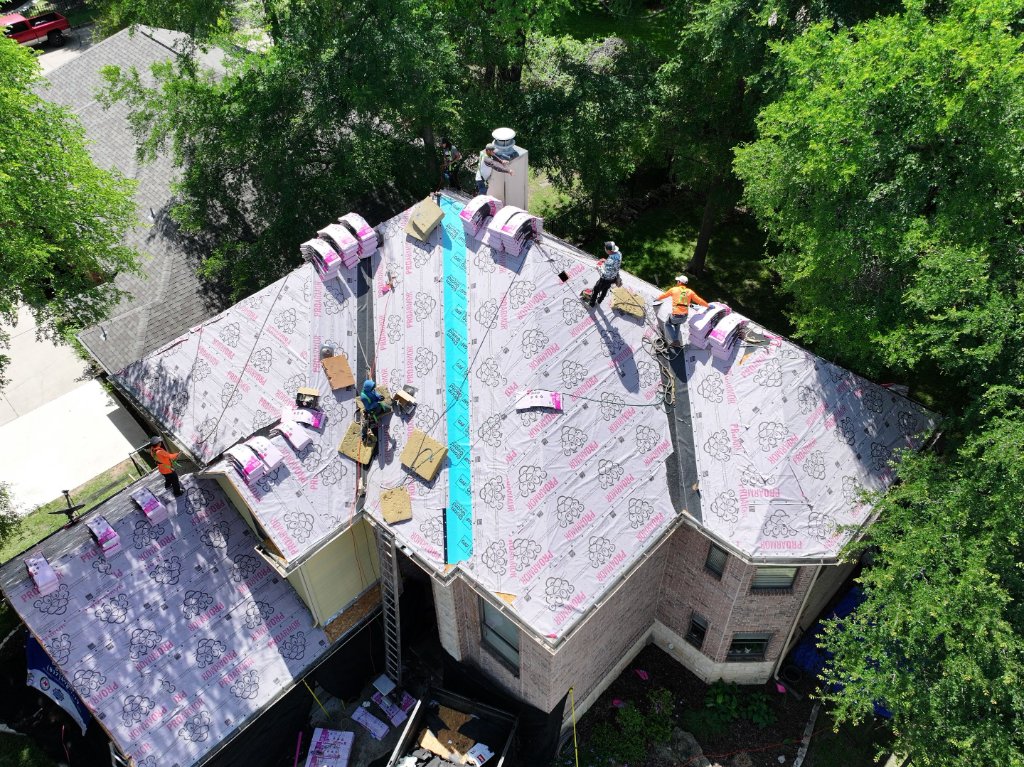
Becker Roofing crew on a North Fort Worth residential roof. Documentation before work begins is standard practice.
Why Fort Worth Homeowners Work With Becker Roofing and Exteriors
- Free photo-documented wind damage inspections across Fort Worth and Northeast Tarrant County ? a written report you can hand directly to your insurance adjuster.
- Adjuster meeting support ? we show up with documentation and flag missed damage on the spot.
- Owens Corning Preferred Contractor ? Becker installs the Total Protection Roofing System, including Class 4 impact- and wind-resistant shingle options.
- TX License #03-0235, fully insured, documentation available before you sign.
- One company for the whole storm: if wind hit your roof, it probably got your gutters, siding, windows, and fence too ? Becker handles all of it.
- 10-year workmanship warranty on all Becker-installed roofs.
Call 817-898-7175 or schedule at brexteriors.com/request-an-inspection.
See how we helped Fort Worth homeowners after the April 2026 storm ?
What does hail damage look like? ?
Fort Worth hail storm history ?
Hiring a roofing contractor checklist ?
Roofing financing options ?
Frequently Asked Questions
How can I tell if my roof has wind damage from the ground?
Look for missing or displaced shingles, lifted edges near the eaves or rakes, displaced ridge cap pieces, granule piles at downspout exits, and any gutter or fascia damage. Ground-level signs often understate the actual damage ? a professional inspection is the only reliable assessment.
Does wind damage always cause a visible leak right away?
No ? and that’s what makes wind damage especially risky. Lifted shingles with broken seals can let water channel underneath without creating an immediate interior leak. The leak typically shows up weeks or months later, by which time the storm event is harder to document.
What wind speed damages a roof in North Texas?
Standard shingles are rated to 60-130 mph depending on type and age, but real-world performance is often lower on older roofs with compromised seals. North Texas regularly sees 50-70 mph gusts in thunderstorm cells ? enough to cause lift damage on shingles 10 years or older.
Will insurance cover wind damage to my Fort Worth roof?
In most cases, yes ? Texas homeowners policies cover wind and hail damage. The amount depends on your policy type (ACV vs. RCV) and your wind/hail deductible. Getting a professional inspection before you file lets you determine whether your damage clears the deductible and gives you documentation to support the claim.
How long do I have to file a wind damage claim in Texas?
Texas law generally gives homeowners two years from the date of loss to file a property insurance claim. File earlier rather than later ? documentation is stronger when the damage is fresh.
Does Becker Roofing and Exteriors serve Fort Worth for wind damage repair?
Yes. Becker Roofing and Exteriors provides free, photo-documented wind damage inspections throughout Fort Worth and Northeast Tarrant County. Call 817-898-7175 or schedule at brexteriors.com/request-an-inspection.
Written by: Sean Becker, Owner ? Becker Roofing and Exteriors. Owens Corning Preferred Contractor. TX License #03-0235. Serving Fort Worth and Northeast Tarrant County since 2018.
Wind Damage Roof Repair for Fort Worth, North Fort Worth, and Northeast Tarrant
North Texas wind can lift shingles, crease tabs, move flashing, and create roof leak risks that are not obvious from the ground. Becker Roofing & Exteriors inspects wind damage across Fort Worth, North Fort Worth, Keller, Lake Worth, Saginaw, Eagle Mountain, Arlington, Grapevine, and Northeast Tarrant County.
If you are searching for North Fort Worth roof repair, North Fort Worth roof leak repair, roofing repair Fort Worth, or Northeast Tarrant County emergency roof repair after a storm, start with a free inspection before rain exposes the leak. We check shingles, ridge caps, flashing, vents, pipe boots, attic staining, and storm-related entry points.
Free Wind Damage Roof Inspection
Call Becker Roofing & Exteriors at 817-898-7175 for a free inspection after wind, hail, or heavy rain.
North Fort Worth Wind Damage and Leak Risk
For North Fort Worth roof repair, North Fort Worth roof leak repair, or Northeast Tarrant County emergency roof repair, wind damage should be documented before the next rain. Becker Roofing & Exteriors checks lifted shingles, creased tabs, ridge damage, flashing movement, roof penetrations, attic staining, and leak paths across Fort Worth, Keller, Lake Worth, Saginaw, Eagle Mountain, and Northeast Tarrant County.
Call 817-898-7175 for a free storm-damage inspection.
Watauga and North Fort Worth wind damage roof repair reinforcement
High winds often create searches like Watauga roofing contractor, Watauga storm damage roofing, North Fort Worth roof leak repair, and roofers near me. Lifted shingles and broken seals can look minor from the ground but become leaks during the next storm.
Becker Roofing and Exteriors serves Watauga, North Fort Worth, Saginaw, Keller, and Northeast Tarrant County. Call 817-898-7175 for a free wind-damage roof inspection.
North Fort Worth and Watauga storm damage roofing gains
Wind-damage content should explain how lifted shingles, torn ridge caps, damaged vents, flashing problems, and hail impacts can become roof leaks after the next rain.
Becker Roofing and Exteriors inspects storm damage in Fort Worth, North Fort Worth, Watauga, Hurst, Keller, and Northeast Tarrant County. Call 817-898-7175 for a free inspection.
North Fort Worth and Watauga storm damage roofing support
Today?s losses included north fort worth storm damage roofing, watauga storm damage roofing, hurst storm damage roofing, and hurst emergency roof repair. Wind damage pages should reinforce how lifted shingles, torn ridge caps, flashing problems, and damaged vents can turn into urgent leaks.
Becker Roofing and Exteriors inspects storm damage in Fort Worth, North Fort Worth, Watauga, Hurst, Keller, and Northeast Tarrant County. Call 817-898-7175 for a free inspection.
Watauga, Hurst, and North Fort Worth Emergency Roof Repair Signals
Wind damage often creates urgent leak risk before shingles fully disappear. Homeowners searching for Watauga storm damage roofing, Hurst emergency roof repair, Hurst roof leak repair, or North Fort Worth storm damage roofing should watch for lifted tabs, loose flashing, wet insulation, stains around vents, and dripping at light fixtures.
Becker Roofing & Exteriors can provide a free roof inspection, temporary guidance when needed, and a repair or replacement plan that fits the damage. Call 817-898-7175 after wind, hail, or heavy rain.


