
Roof Insurance Claims in Fort Worth, TX: What Is Covered After Hail?
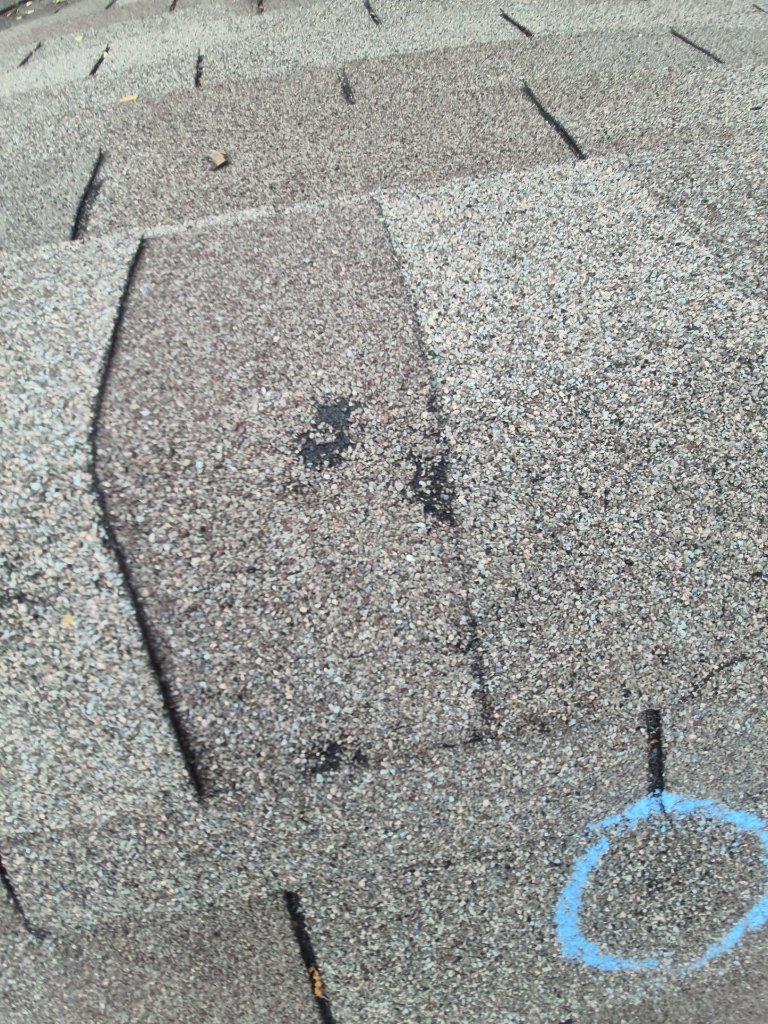 Hail impact bruising on Fort Worth asphalt shingles following the April 24–29, 2026 severe weather complex.
Table of Contents
- What Fort Worth Homeowners Are Dealing With
- What Does a Texas Homeowner Policy Actually Cover for Roofs?
- Understanding Your Wind/Hail Deductible
- How to File a Roof Insurance Claim in Fort Worth, TX
- What the Insurance Adjuster Is Looking For
- Common Reasons Claims Get Underpaid or Denied
- When to Consider a Public Adjuster or Attorney
- Fort Worth and Lake Worth Roof Claim Help
- Why Fort Worth Homeowners Work With Becker on Insurance Claims
- Frequently Asked Questions
If you’re a Fort Worth homeowner trying to figure out whether your insurance will pay for your damaged roof, you’re asking the right question at the right time. After the April 24–29, 2026 severe weather complex that swept through North and Central Texas — six consecutive days of large hail, damaging winds, tornadoes, and flooding across Tarrant, Parker, Johnson, and surrounding counties — thousands of DFW homeowners are currently navigating this exact question. The storm system produced 226 confirmed large hail reports, with hail reaching golf ball to softball size across multiple Tarrant County communities, and WFAA reported aircraft at the Fort Worth Aviation Museum were visibly damaged in the same storm system. Whether your claim ends up covered — and how much you get — depends on your policy language, your deductible type, how well damage is documented, and whether you have a contractor who knows how to work with adjusters. This guide breaks down exactly how roof insurance claims work in Texas and what you can do to maximize your outcome.
What Fort Worth Homeowners Are Dealing With
Fort Worth and Northeast Tarrant County sit in one of the most hail-active corridors in the United States. The area sees an average of six or more significant hail events per year, and 2026 has already stacked up serious damage. Here’s what’s on the table for homeowners right now:- April 2026 hail spread across I-820, I-30, and I-35W corridors, with documented damage in North Fort Worth, Haltom City, Watauga, Keller, and areas south of downtown. See our Fort Worth hail storm history page for documented events over the last decade.
- Older housing stock is particularly vulnerable. Many Fort Worth neighborhoods — especially those west of I-820 and north of I-30 — have homes built in the 1990s and early 2000s with 20- to 25-year-old asphalt shingles that are at or near the end of their expected service life. A hailstorm on an aging roof often crosses the threshold from “repair” to “replace.”
- Storm chasers are already working the area. After every major DFW hail event, out-of-state roofing crews flood the market with door-to-door solicitations, often asking homeowners to sign Assignment of Benefits (AOB) agreements before a claim is even filed. Learn how to choose a contractor in DFW before you sign anything.
- Check your policy deadline and report promptly. Claim deadlines vary. Photograph damage and contact your insurer as soon as practical; a roof inspection can help document the condition but does not extend your reporting deadline.
What Does a Texas Homeowner Policy Actually Cover for Roofs?
Most standard Texas homeowner policies (HO-3 form) cover roof damage caused by sudden, accidental events — which includes hail, wind, falling trees, and similar perils. What matters is how your specific policy defines coverage, replacement value, and exclusions. Key distinctions to understand:- Actual Cash Value (ACV) vs. Replacement Cost Value (RCV). An ACV policy pays the depreciated value of your roof — an aging 20-year-old roof on an ACV policy may receive very little. An RCV policy pays what it actually costs to replace the roof with like materials. If you’re not sure which you have, check your declarations page or call your agent before filing.
- Cosmetic damage exclusions. Some Texas policies now include exclusions for “cosmetic” damage — dents or dings that don’t affect the roof’s ability to keep water out. If your policy has this language, granule loss and surface bruising from hail may be excluded even if the damage is real and measurable. This is increasingly common in DFW policies written after 2022.
- Excluded perils. Flood, mold pre-existing the storm event, and normal wear and tear are almost universally excluded. If your roof leaked before the hail hit, that pre-existing condition can complicate or reduce your claim.
- Matching provisions. Texas has relatively homeowner-friendly case law around matching — if your insurer replaces damaged sections, they generally must ensure the result matches the undamaged portions. This matters a lot on homes where only one roof slope is hit hard.
Understanding Your Wind/Hail Deductible
This is where most Fort Worth homeowners get surprised. Many Texas policies carry a separate, percentage-based wind and hail deductible — commonly 1%, 2%, or even 3% of the home’s insured value — that is completely separate from the flat dollar deductible you’d pay for, say, a kitchen fire. Example: A home insured for $400,000 with a 2% wind/hail deductible means the homeowner pays the first $8,000 of any hail damage claim out of pocket — not the $1,000 or $2,500 flat deductible they might be thinking of. This is a common source of confusion and frustration. Some homeowners discover mid-claim that their out-of-pocket responsibility is significantly higher than expected. Our guide on percentage deductibles walks through the math in detail and helps you decide whether filing makes sense for your situation. One silver lining: upgrading to Owens Corning Duration Storm or Duration FLEX shingles — both Class 4 impact-resistant products — can qualify you for a wind/hail deductible reduction with many Texas carriers. Some insurers reduce the wind/hail deductible by as much as 20–30% for Class 4 roofs. See our Owens Corning shingle guide for details on what’s available.How to File a Roof Insurance Claim in Fort Worth, TX
Filing a roof insurance claim after hail is a process, not a single phone call. Here’s how to do it right: Step 1: Document the damage before anything is touched. Walk your property immediately after the storm and take timestamped photos of: – The roofline from all four angles – Gutters and downspouts (granule buildup is a key indicator) – Soft metals: AC unit fins, mailboxes, gutters, window wraps — these dent before shingles show visible marks and serve as corroborating evidence – Screens, siding, fencing — hail rarely hits just the roof Use your phone so photos are geotagged and timestamped. This creates a contemporaneous record that’s hard for an adjuster to dispute later. For a complete checklist, see our roof inspection checklist for DFW homeowners. Step 2: Get a professional inspection before you call your insurer. A photo-documented inspection from a qualified roofing contractor gives you an independent assessment of the damage scope before the insurance adjuster arrives. This matters because adjusters — especially during high-volume events like the April 2026 storm — work quickly and can miss damage. Schedule your free Becker inspection here. Step 3: Call your insurance company to open a claim. Report the loss as soon as reasonably possible. Texas requires claims to be filed within the policy’s reporting window (check your policy), though the two-year statute of limitations for property insurance claims sets the outer boundary. When you call, have your policy number, the storm date, and your initial photo documentation ready. Step 4: Request that your contractor be present for the adjuster inspection. This is important. After a major storm, adjusters work large caseloads and move fast. Having your contractor on-site during the adjuster walk means someone who knows exactly what hail damage looks like on shingles, flashing, pipe boots, and ridge caps can point out items the adjuster might otherwise miss. Missed line items = underpayment. Step 5: Review the Scope of Loss carefully. When your insurer sends a claim summary, read every line. Common issues include: – Missing line items (broken pipe boots, drip edge, ice and water shield code requirements) – Depreciation applied incorrectly on RCV policies – Labor rates below current DFW market costs – Missed matching requirements on partial replacement scopes If the scope doesn’t align with your contractor’s assessment, a supplement can be filed. This is normal and expected after complex storm events. Becker Roofing assists clients with supplement documentation as part of our standard insurance claim support process.What the Insurance Adjuster Is Looking For
Understanding what adjusters document helps you prepare better. Most adjusters are looking for:- Hail hits per 10-square-foot test square — standard protocols often require a minimum number of visible hits per test square (commonly 8–10) to recommend full replacement. Bruising without obvious shattering can be argued either way.
- Age and condition of the roof — adjusters factor in the roof’s remaining useful life, especially on ACV policies.
- Code upgrade requirements — depending on the extent of damage and local codes, insurance may need to pay for code-required upgrades like ice and water shield or updated drip edge configurations even if those weren’t part of the original installation.
- Additional structure damage — gutters, siding, HVAC units, skylights, and chimney caps are all fair game and should be documented on the same inspection.
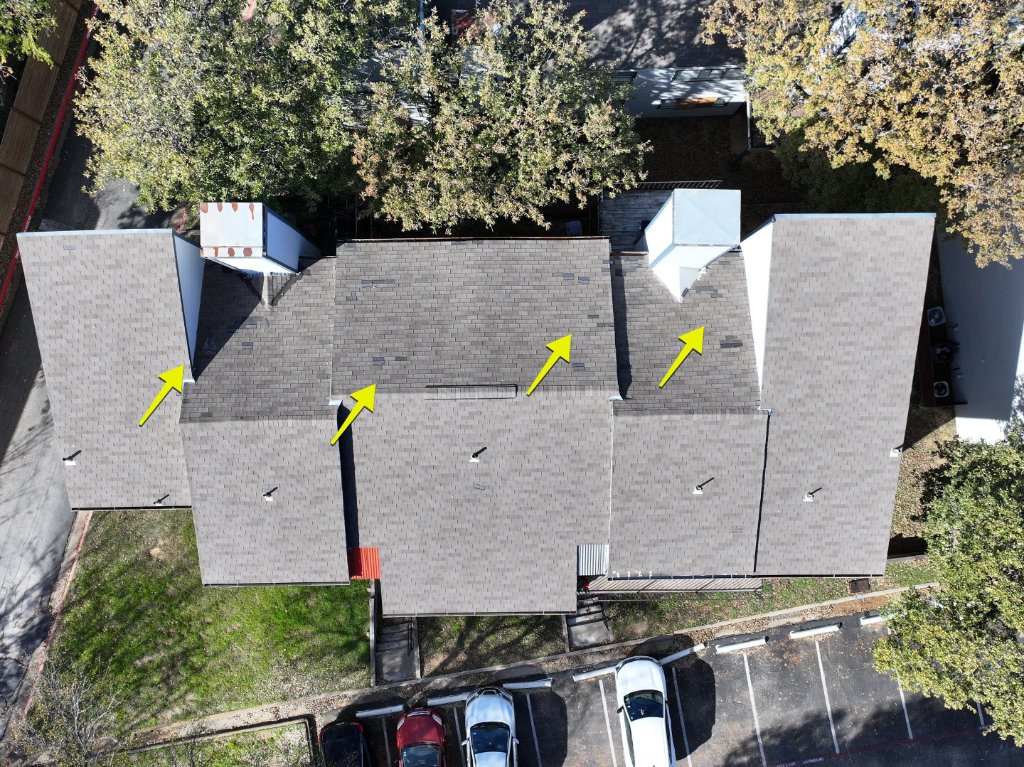 Documented hail damage across multiple roof slopes in North Fort Worth, TX.
Common Reasons Claims Get Underpaid or Denied
Knowing the failure modes helps you avoid them:- Poor initial documentation. If you wait weeks to document damage and the roof gets further degraded by another rain event, it’s harder to isolate original storm damage.
- Signing an AOB before your claim is processed. Assignment of Benefits agreements transfer your claim rights to the contractor. In Texas, these arrangements are frequently used to inflate claims or lock homeowners into disputes. See our roofing contractor checklist before signing anything.
- Pre-existing conditions not addressed before the claim. If an adjuster finds evidence your roof was already leaking or damaged before the storm, they may attribute damage to the pre-existing condition rather than the storm event.
- Cosmetic damage exclusion language. As noted above, some newer policies exclude granule loss and surface denting that doesn’t compromise waterproofing. If your policy has this language, you need a contractor who can document functional impairment — not just cosmetic damage.
- Missing the filing window. Review your policy for notice and claim deadlines and contact your insurer promptly.
- Not requesting your contractor be present for the adjuster visit. This is the single most common recoverable mistake. Adjusters who walk without a contractor on-site routinely miss line items.
When to Consider a Public Adjuster or Attorney
If your claim was denied, significantly underpaid, or your insurer is delaying without a clear reason, you have options beyond accepting the outcome:- Public adjusters work for homeowners (not insurance companies) and take a percentage fee — typically 5–15% of the settlement — in exchange for renegotiating your claim. They’re most valuable on large, complex claims where the gap between the insurer’s offer and actual damage cost is substantial.
- Insurance claim attorneys can be appropriate when a carrier is acting in bad faith or denying a clearly covered claim without reasonable basis. Texas has specific statutes governing prompt payment and bad faith conduct by insurers.
- Supplementing with your contractor. For underpaid claims where the gap is primarily a missed line item issue rather than a coverage dispute, your contractor can often file a supplement directly that closes the gap without involving a public adjuster. Becker does this regularly.
Fort Worth and Lake Worth Roof Claim Help
Becker Roofing and Exteriors helps homeowners with roof insurance claims across Fort Worth, Lake Worth, Eagle Mountain, Saginaw, Azle, River Oaks, White Settlement, Sansom Park, and the west side of Tarrant County. If hail hit your neighborhood, we can document shingle bruising, soft-metal dents, vent and flashing damage, gutter damage, and storm-related leaks with photos your adjuster can review.
Our role is simple: inspect the roof, explain whether the damage looks claim-worthy, meet the adjuster when needed, and provide a clear repair or replacement scope. We do not waive deductibles or play games with insurance paperwork. We help you understand the damage and make sure the roof, gutters, siding, and related exterior items are not overlooked after a North Texas storm.
Need help with a Fort Worth or Lake Worth roof insurance claim? Call 817-898-7175 or request a free inspection online.
Why Fort Worth Homeowners Work With Becker on Insurance Claims
Becker Roofing and Exteriors has handled hundreds of insurance-backed roof replacements across Northeast Tarrant County since 2018. Here’s what we bring to the claim process:- Free, photo-documented inspections — our inspection reports are built for insurance adjusters, with annotated photos of every damage point across all roof slopes, plus soft-metal and satellite structure documentation.
- Adjuster presence — we coordinate with your adjuster visit timeline and attend the inspection to identify missed items in real time.
- Supplement support — if your initial claim scope is missing line items, we prepare the documentation needed to file a supplement.
- Owens Corning Preferred Contractor status means access to Owens Corning’s Total Protection Roofing System warranty — including impact-resistant Duration Storm and Duration FLEX shingle options that can reduce your wind/hail deductible going forward. Learn about Owens Corning shingle options.
- 10-year workmanship warranty — on every Becker installation, regardless of whether it’s insurance-funded or cash-pay.
- One call for everything — hail rarely just hits the roof. We also document and handle gutters, siding, fencing, and exterior damage that was part of the same storm event. See our exterior services page.
Frequently Asked Questions
Does homeowners insurance cover hail damage to my roof in Fort Worth?
Most standard HO-3 homeowner policies in Texas cover hail damage to the roof as a named peril. Coverage depends on your specific policy language, deductible type, and the extent of documented damage. Newer policies may contain cosmetic damage exclusions that limit coverage for granule loss or surface denting that doesn’t affect waterproofing. A professional inspection before you file gives you the clearest picture of what to expect.How long do I have to file a roof insurance claim in Texas after hail?
Claim and notice deadlines vary by policy. Document damage and contact your insurer promptly. The Texas Department of Insurance advises homeowners to report damage as soon as possible.What is a wind and hail deductible, and how does it affect my Fort Worth claim?
Many Texas policies have a separate wind/hail deductible expressed as a percentage of the home’s insured value (commonly 1–2%). On a home insured for $350,000 with a 2% wind/hail deductible, your out-of-pocket responsibility is $7,000 before insurance pays a dollar. This is separate from your standard homeowner deductible. Our guide on whether a claim makes sense with a 2% deductible walks through the math.Should I get a roofing contractor inspection before or after calling my insurance company?
Before, if possible. An independent inspection report from a qualified contractor gives you a documented baseline of the damage scope before the adjuster arrives. It also means you’re not relying entirely on the adjuster’s assessment — adjusters working high-volume storm events move quickly and routinely miss line items.What if my insurance company denies my Fort Worth roof claim or pays less than expected?
You have options. You can request a re-inspection, have your contractor file a supplement for missed items, engage a public adjuster to renegotiate the claim, or consult an insurance claim attorney if the denial appears to be bad faith. Don’t accept a denial or underpayment as final until you understand the reason and have had a professional review the scope. Our reviews page includes feedback from Fort Worth homeowners who successfully navigated this process with Becker’s support.Does Becker Roofing and Exteriors serve Fort Worth for insurance-backed roof replacements?
Yes. Becker Roofing and Exteriors serves Fort Worth and all of Northeast Tarrant County with free hail damage inspections, insurance claim support, and Owens Corning-certified residential roof replacements. Call 817-898-7175 or schedule online.Posted June 23, 2026 · 9 min read About the Author: Sean Becker is the owner of Becker Roofing and Exteriors, an Owens Corning Preferred Contractor based in North Richland Hills, TX. He has helped hundreds of Fort Worth and Northeast Tarrant County homeowners navigate roof insurance claims, storm damage repairs, and roof replacements since founding the company in 2018. He is also the author of Roofs That Last, available on Amazon. Contact Becker Roofing · License TX #03-0235.
Sean explains ACV and RCV
Before making a roof claim, understand how your policy handles actual cash value and replacement cost value. Watch Sean explain the difference, then check your own policy and ask your insurer about its terms.

