
Roof Insurance Claims in Dallas, Fort Worth, North Fort Worth, and Keller After Hail
Roof Insurance Claims in Dallas, TX: What Is Covered After Hail?
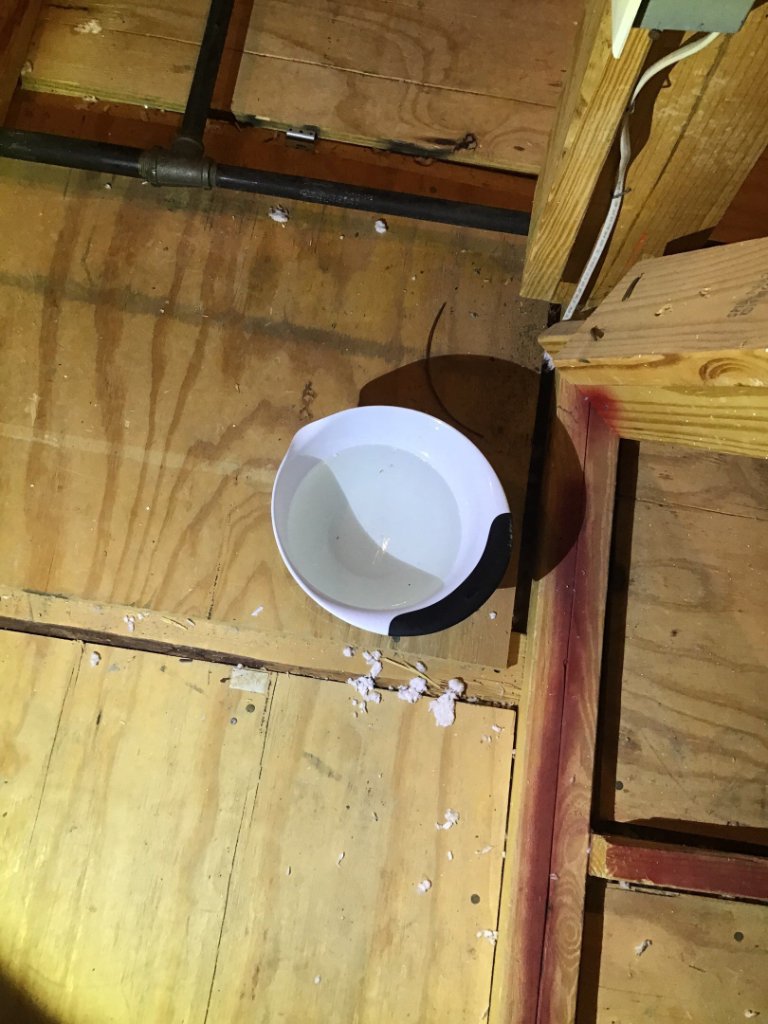 An active roof leak caught in a bucket inside a home in Allen, TX, near Dallas ? the kind of damage that often qualifies for an insurance claim after a hailstorm.
Table of Contents
- Why This Question Matters Right Now in Dallas
- What Homeowner’s Insurance Typically Covers After Hail
- What’s Usually NOT Covered
- Understanding Your Deductible
- The Texas Two-Year Filing Window
- How the Claims Process Actually Works
- Common Reasons Claims Get Denied (and How to Avoid Them)
- How Becker Helps Dallas Homeowners Through the Claims Process
- Frequently Asked Questions
After a hailstorm, the question every Dallas homeowner asks is some version of “is this covered?” The honest answer is: usually yes, but with a lot of fine print that determines how much you’ll actually receive and how smoothly the process goes. This guide walks through what’s typically covered, what isn’t, how Texas’s claim-filing rules work, and how to avoid the most common reasons claims get denied or underpaid ? especially relevant after the April 25-26, 2026 supercell that tracked across North Texas, producing an EF-2 tornado near Runaway Bay, an EF-1 tornado in Springtown, and hail from pea-sized to baseball-sized before dissipating in Kaufman County, just east of Dallas (CBS Texas).
Why This Question Matters Right Now in Dallas
The April 2026 storm tracked across Wise, Parker, and Tarrant counties before continuing southeast into Dallas County and dissipating in Kaufman County around 3:30 a.m. (CBS Texas; NWS Fort Worth, April 2026 severe weather summary). That means a large number of Dallas homes ? particularly in East Dallas, Lake Highlands, Pleasant Grove, and along the I-30/I-20 corridor toward Kaufman County ? were within the storm’s path. If you haven’t checked your roof since then, now is the time, because Texas insurers will eventually start asking “when did this damage occur,” and the answer matters for your claim.
What Homeowner’s Insurance Typically Covers After Hail
Most standard Texas homeowner’s (HO-3) policies include wind and hail as a covered peril, meaning the following are typically covered when damage results from a hailstorm:
- Roof covering ? shingles, tile, or metal roofing damaged by hail impact, including granule loss severe enough to compromise the shingle’s protective layer
- Flashing and roof penetrations ? chimney flashing, vent boots, skylights, and similar components damaged by hail or wind
- Gutters and downspouts ? dented or detached gutters are commonly included, especially when used as supporting evidence of hail size
- Siding, fascia, and soffit ? impact damage to exterior cladding on the side of the home that faced the storm
- Interior damage caused by a covered roof failure ? if hail punctures your roof and water damages ceilings, drywall, insulation, or flooring, that interior damage is typically covered as a consequence of the covered roof damage
- Other structures ? detached garages, sheds, and fences sometimes have separate coverage limits but are often included
The key phrase insurers use is “sudden and accidental” damage from a specific event ? which is exactly why documenting the storm date and damage pattern matters so much.
What’s Usually NOT Covered
- Pre-existing damage or normal wear and tear. If your roof was already at the end of its useful life (most asphalt shingle roofs last 15-25 years) before the storm, an adjuster may attribute some or all of the damage to age rather than the storm ? which is part of why a pre-storm inspection and good photo records matter.
- Cosmetic damage on some policies. A small number of Texas insurers have added “cosmetic damage” exclusions specifically for metal roofs, where hail dents that don’t affect function aren’t covered. Check your policy’s endorsements if you have a metal roof.
- Damage from lack of maintenance. If a leak is traced to a maintenance issue (clogged gutters, deteriorated flashing that was never addressed, etc.) rather than the storm itself, that portion may be denied.
- Mold that results from delayed repairs. If you wait too long to address a known leak after a storm, resulting mold damage may be excluded ? another reason prompt emergency repairs matter.
- Damage below your deductible. If the total covered damage doesn’t exceed your deductible, the claim may technically be “covered” but result in no payment.
Understanding Your Deductible
This is the part that surprises the most Dallas homeowners. Many Texas homeowner’s policies use a percentage-based wind/hail deductible ? often 1% or 2% of your dwelling coverage amount ? rather than a flat dollar figure like $1,000 or $2,500.
On a home insured for $350,000, a 2% wind/hail deductible means $7,000 out of pocket before insurance pays anything ? a very different number than a flat $1,000 deductible. This single fact changes the math on whether filing a claim makes sense at all for smaller damage, and it’s worth understanding before you call your insurer. Read our full breakdown of percentage deductibles and whether filing is worth it ?
The Texas Two-Year Filing Window
Texas law generally gives homeowners up to two years from the date of loss to file a property insurance claim for wind and hail damage. This is genuinely useful ? it means a missed inspection right after a storm isn’t the end of the road. But “you have time” doesn’t mean “you should wait”:
- Damage gets worse. A small hail-bruised area today can become a full leak after the next heavy Dallas rain.
- Evidence gets harder to attribute. The longer you wait, the harder it becomes to confidently tie damage to a specific storm date versus general wear or a more recent (smaller) weather event.
- Multiple storms complicate things. North Texas sees several hail-producing storms most years. If you wait a year and another storm hits, separating which damage came from which event becomes a real headache for both you and the adjuster.
The practical takeaway: you’re not in trouble if you’re reading this months after a storm, but don’t wait longer than you have to.
How the Claims Process Actually Works
- Document the damage. Timestamped photos of the roof, gutters, siding, and any interior damage, ideally before any temporary repairs are made.
- File the claim with your insurer. Most carriers allow this online or by phone; you’ll get a claim number and, typically, an adjuster assignment within days.
- Adjuster inspection. A staff or independent adjuster visits the property to assess damage and write an initial scope and estimate. Learn the difference between adjuster types and how each affects your claim ?
- Contractor walkthrough (highly recommended). Having your roofing contractor present during or shortly after the adjuster’s visit means a second set of trained eyes catches anything missed ? which happens often after large regional events when adjusters are covering huge volumes of claims.
- Settlement and supplement. The insurer issues an initial settlement based on the adjuster’s scope. If your contractor identifies additional covered damage (a common occurrence), a supplement request can be filed to adjust the payout.
- Repair or replacement. Once the scope and payment are finalized, work begins. Keep all receipts, especially for any emergency mitigation (tarping, etc.), as those costs are often reimbursable separately.
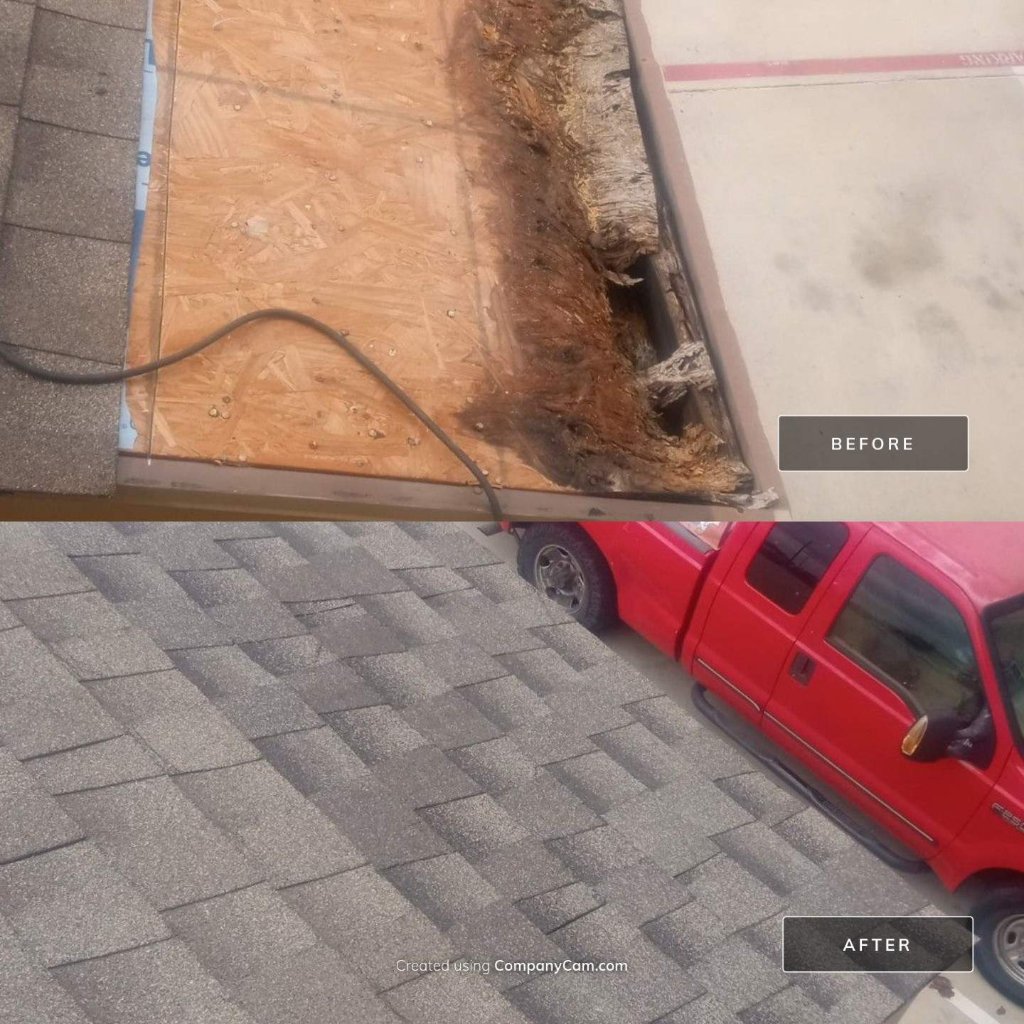 Before-and-after roof leak repair on a home in Plano, TX, near Dallas ? documenting damage like this with photos strengthens an insurance claim.
Common Reasons Claims Get Denied (and How to Avoid Them)
- “Damage is cosmetic, not functional.” Counter this with a detailed inspection report that documents not just visible dents but granule loss, exposed mat, and compromised seal lines.
- “Damage predates the storm in question.” Have a date-stamped record of your roof’s condition before the storm if possible (a previous inspection report, recent photos, or even real estate listing photos).
- “The damage doesn’t exceed your deductible.” Get a full, itemized scope from a professional ? adjusters sometimes underestimate the scope needed, which can push the total below the deductible threshold incorrectly.
- “This is a maintenance issue, not storm damage.” A clear narrative connecting the damage pattern (location, distribution, type) to a specific wind/hail event helps distinguish storm damage from gradual deterioration.
- Missed deadlines or incomplete paperwork. While Texas’s two-year window is generous, individual policies may have their own notice requirements ? read your policy or have your contractor help you understand the timeline.
If your claim has already been denied or you believe it was underpaid, our guide to common reasons roof insurance claims get denied in North Texas walks through next steps, including the right to request a re-inspection, invoke the appraisal process, or file a supplement.
How Becker Helps Dallas Homeowners Through the Claims Process
Becker Roofing and Exteriors isn’t an insurance company and doesn’t promise specific claim outcomes ? but as an Owens Corning roofing contractor with years of experience working alongside Dallas-area adjusters, Becker can:
- Provide a free, photo-documented inspection that clearly distinguishes storm damage from pre-existing wear
- Attend the adjuster inspection to point out damage that might otherwise be missed
- Help prepare supplement requests when the initial scope doesn’t reflect the full extent of covered damage
- Provide a clear, itemized repair or replacement estimate that matches what your insurer needs to process the claim
- Coordinate roofing, gutters, siding, windows, and fencing under one roof if the same storm damaged multiple parts of your home’s exterior
Call 817-898-7175 or schedule a free Dallas roof inspection at brexteriors.com/request-an-inspection. If you’re still deciding on a contractor, see our comparison of the best roofing companies in Dallas ?, and if you suspect hail damage specifically, start with our hail damage roof repair guide ?.
Frequently Asked Questions
Does homeowner’s insurance cover roof hail damage in Dallas?
In most cases, yes. Standard Texas homeowner’s policies include wind and hail as a covered peril, covering the roof covering, flashing, gutters, and resulting interior damage from a covered roof failure ? subject to your deductible and any policy-specific exclusions.
What is a percentage-based deductible and how does it affect my claim?
Instead of a flat dollar amount, many Texas wind/hail deductibles are a percentage (commonly 1-2%) of your home’s insured dwelling value. On a $300,000 home with a 2% deductible, that’s $6,000 out of pocket before coverage kicks in ? a number worth knowing before you decide whether to file. Read more about percentage deductibles ?
How long do I have to file a roof insurance claim in Texas?
Generally up to two years from the date of loss for wind and hail damage. However, filing sooner with strong documentation typically leads to a faster, smoother claims process and avoids disputes about whether damage came from a more recent, unrelated event.
What if my insurance company denies my roof claim?
You can request a re-inspection, provide additional documentation (including a contractor’s independent inspection report), or file a supplement if new damage is identified. Our guide on common reasons claims get denied in North Texas covers the most frequent issues and how to address them.
Will filing a claim raise my insurance rates?
It’s possible, particularly after multiple claims in a short period ? but a single legitimate storm-damage claim is generally treated differently than at-fault claims. This is a question worth asking your specific carrier or agent, since policies and underwriting practices vary.
Does Becker Roofing and Exteriors help with insurance claims in Dallas?
Yes. Becker Roofing and Exteriors provides free, photo-documented inspections and can attend adjuster visits to help ensure all storm damage is captured in your claim. Call 817-898-7175 or schedule a free inspection ?. You can also browse recent project photos ? or read customer reviews ?.
Written by: Sean Becker, Owner of Becker Roofing and Exteriors. Sean founded Becker Roofing and Exteriors in 2018 and has worked alongside homeowners and insurance adjusters across the Dallas-Fort Worth metroplex as an Owens Corning roofing contractor. Have questions about a Dallas roof insurance claim? Contact Becker directly ? or browse more roofing guides on the Becker blog ?.
Explore More Roofing Resources from Becker
Becker Roofing and Exteriors publishes ongoing guides to help Dallas-Fort Worth homeowners navigate storms, insurance claims, and roof replacement decisions. Here are more resources related to this topic:
Recent DFW Storm & Hail Reports
- DFW Hail Storms: April 25 & 27, 2026 Recap
- April 25, 2026 Hail Storm: Fort Worth & North Texas
- April 27, 2026 Hail Storm: Rockwall, Rowlett, Richardson & Garland
- DFW Hailstorm 2025: Historic Storm Strikes North Texas
Hail & Storm Damage Guides
- Hail Damage Roof Repair in Dallas
- Hail Damage Roof Repair in Fort Worth
- How to Spot Hail Damage on Your Roof
- Best Hail-Resistant Shingles for Texas Roofs
- Assessing Fort Worth Hail Damage: Azle, Eagle Mountain & Lake Worth
Insurance Claims & Deductibles
- Insurance Adjuster Types in Texas and Your Roof Claim
- Roof Insurance Claim Denied? Common Reasons in North Texas
- How to Navigate Insurance Denials for Roofing Claims
- The Appraisal Process in Insurance Claims, Explained
- Roof Replacement Deductible: What You Need to Know
Roof Replacement & Repair
- Roof Replacement Cost in Dallas, TX: 2026 Guide
- Roof Replacement Cost in Fort Worth, TX: 2026 Guide
- 7 Signs Your Roof Needs Replacement Before It Leaks
- Metal Roofing vs. Asphalt Shingles: 2026 Comparison
- Flat Roof vs. Pitched Roof: Which Is Best?
Emergency Service & Top-Rated Roofers
- Emergency Roof Repair in Dallas
- Emergency Roof Repair in Fort Worth
- 6 Best Roofing Companies in Dallas, TX
- 7 Best Roofing Companies in Fort Worth, TX
Becker Roofing Services
- Residential Roofing Services
- Commercial Roofing Services
- Request a Free Roof Inspection
- Project Gallery
- Customer Reviews
- Instant Roof Estimator
Areas We Serve Near You
Additional Resources
- Texas Department of Insurance ? Storm Damage & Claims Resources
- Insurance Institute for Business & Home Safety (IBHS)
- National Weather Service ? Fort Worth/Dallas Forecast Office
Should I get a roof inspection before filing an insurance claim?
Yes. A documented inspection helps you understand whether the damage appears storm-related, whether repairs are realistic, and which photos or line items may matter if an adjuster reviews the roof.
North Fort Worth and Keller claim terms to protect
Insurance claim content should connect storm date, roof photos, soft-metal damage, gutters, vents, flashing, and interior leak signs into one clear documentation package.
Becker Roofing and Exteriors helps Dallas, Fort Worth, North Fort Worth, Keller, Hurst, Watauga, and Northeast Tarrant County homeowners with free roof inspections and claim documentation. Call 817-898-7175.
Insurance Claim Documentation for North Fort Worth and Northeast Tarrant
For homeowners searching north fort worth insurance roof claim or northeast tarrant county insurance roof claim, Becker Roofing & Exteriors focuses on clean documentation: photos of hail hits, wind lift, damaged soft metals, gutters, roof accessories, and active or potential leak areas.
We do not decide coverage, but we do help you understand what roof damage is visible and what repair or replacement scope may be needed. Schedule a free inspection at 817-898-7175 before filing or supplementing a storm-related roof claim.
Related Becker Roofing Video
Watch: Home Insurance Deductibles: Avoid Costly Roof Claim Surprises


