
Hail Damage Roof Repair in Plano, Frisco, Fort Worth, and Northeast Tarrant
What a Plano hail damage inspection should cover
Plano hail damage can vary by roof slope and material. However, visible neighborhood damage alone does not prove that every roof needs replacement.
Confirm storm information through the National Weather Service. Then request a free roof inspection or call 817-898-7175.
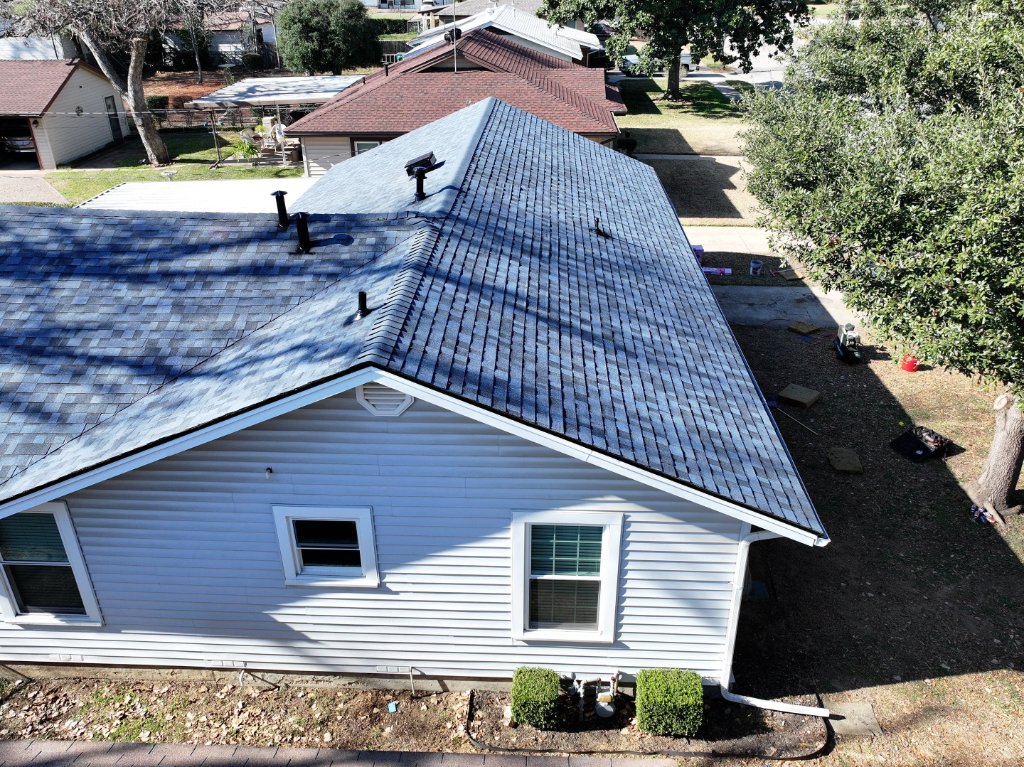
Storm-damaged shingle repair on a Plano, TX home.
Table of Contents
- Did Your Plano Roof Just Take a Hail Hit?
- Step 1: Document Everything From the Ground
- Step 2: Get a Free Professional Inspection
- Step 3: Understand What Hail Actually Does to a Roof
- Step 4: Start Your Insurance Claim the Right Way
- Step 5: Choose Repair vs. Full Replacement
- Why Plano Homeowners Choose Becker for Hail Repairs
- Frequently Asked Questions
If hail just hit your Plano neighborhood, the next 48 hours matter more than you’d think. Plano sits in Collin County, which Allstate data from 2008-2018 ranked as the top county in Texas for wind, lightning, and hail-related property damage claims ? this is one of the most hail-battered places in the state. The most recent significant hail near Plano fell on April 27, 2026 with golf-ball-size stones (1.75″), and Plano logged a dozen hail reports within 10 miles this year alone (Stormer Site hail reports, Plano). Across Collin and Denton counties, some of the season’s largest hail damage has been reported (WFAA). Here’s exactly what to do, in order, if you suspect hail damage roof repair is in your near future.
Did Your Plano Roof Just Take a Hail Hit?
You don’t need to climb a ladder to get your first read on the situation. From the ground, check for:
- Granules in your gutters or downspout splash zones ? these look like coarse black sand and are one of the clearest signs of shingle bruising.
- Dents in soft metal ? AC unit fins, gutters, window wraps, and mailboxes all dent before shingles visibly show damage, and adjusters use them to gauge hail size.
- Damaged window screens or siding ? tears or dings on the side of the house that faced the storm.
- Visible shingle damage ? cracked, curled, or missing shingles, or dark “bruised” spots where granules have been knocked loose.
If you see even one or two of these signs, treat it as a strong signal your roof needs a closer look. Golf-ball hail like Plano’s April storm is more than large enough to bruise shingles across whole slopes ? and hail damage is often invisible from the ground but very real underneath the shingle surface. Our how to spot hail damage on your roof guide has more detail.
Step 1: Document Everything From the Ground
Before you call anyone, walk around your home and take timestamped photos of:
- The roofline from multiple angles (front, back, both sides)
- Gutters and downspouts, especially any granule buildup
- AC units, mailboxes, and any other exposed metal
- Window screens, siding, and fences
This costs nothing, takes 10 minutes, and gives you and your contractor a “before” record that strengthens any insurance claim later. Keep the date of the storm handy ? it becomes your date of loss on the claim.
Step 2: Get a Free Professional Inspection
This is the step homeowners skip most often, and it’s the one that matters most. A professional roof inspection after hail should include:
- A full roof walk, not just a binocular look from the ground
- Photo documentation of every damaged shingle, vent, flashing point, and pipe boot
- A written report you can hand directly to your insurance company
Becker Roofing and Exteriors provides free hail damage inspections across Plano and Collin County, with photo-backed reports built for insurance adjusters. Schedule your free inspection ? or contact our team. You can also see real storm repair work in our gallery.
Step 3: Understand What Hail Actually Does to a Roof
Hail damage isn’t always a hole punched through your roof. More often, it’s:
- Granule loss ? the protective ceramic granules on asphalt shingles get knocked loose, exposing the asphalt mat underneath to UV damage that shortens the roof’s life.
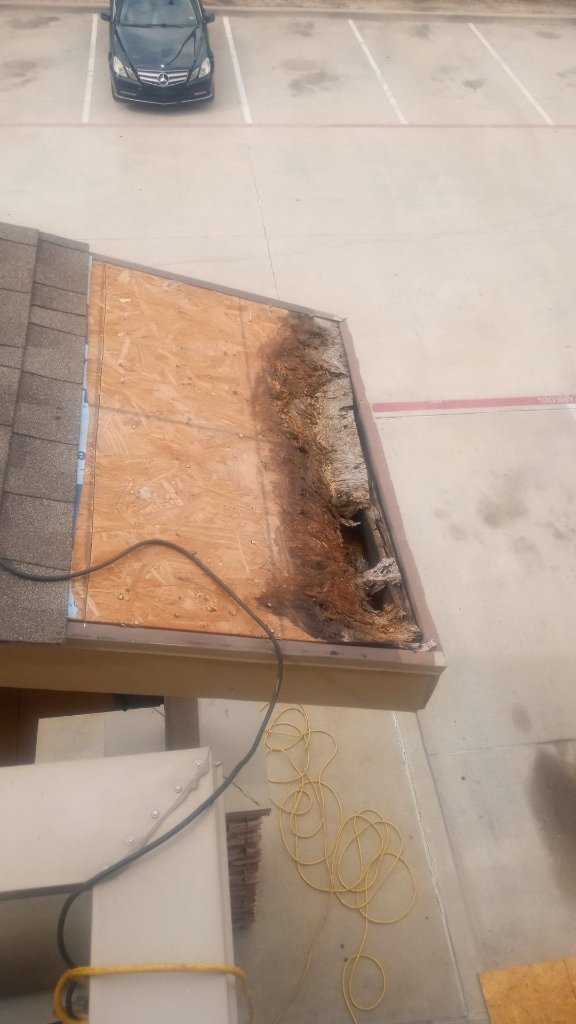
- Bruising ? soft, indented spots where the shingle’s structure is compromised but not visibly cracked. These can leak months or years later.
- Cracking and splitting ? especially on older or already-brittle shingles baked by Texas summers.
- Flashing and vent damage ? hail dents and damages the metal flashing around chimneys, vents, and skylights, which is often where leaks actually start.
If your current roof is older asphalt, it’s worth a conversation about Owens Corning Duration Storm or Duration FLEX shingles ? Class 4 impact-resistant shingles that hold up significantly better against hail and often qualify for insurance premium discounts in Texas. Compare the options in our metal vs. asphalt shingle guide.

A close-up of hail impact damage on an asphalt shingle.
Step 4: Start Your Insurance Claim the Right Way
- File promptly. Texas generally allows up to two years from the date of loss to file a property insurance claim, but earlier filing with strong documentation leads to smoother claims.
- Request your contractor be present for the adjuster inspection. After a Collin County hail event, adjusters handle enormous claim volumes and routinely miss damage ? having a roofing professional on-site to point out missed items can make a real difference in your settlement.
- Understand your deductible. Many Texas policies carry a percentage-based wind/hail deductible rather than a flat dollar amount ? often 1-2% of your dwelling coverage. Our guide on percentage deductibles and whether filing makes sense helps you run that math.
- Know your adjuster type. Whether you’re working with a staff adjuster, independent adjuster, or public adjuster changes how the process plays out ? see our breakdown of adjuster types in Texas.
- Understand why claims get denied. Documentation and timing decide most outcomes ? read the common reasons roof claims get denied in North Texas.
Because so many Plano homes in the same subdivision share the same roof, “matching” rules often come into play ? see how we handle claims in neighboring Arlington and Grapevine for a sense of the process.
Step 5: Choose Repair vs. Full Replacement
Not every hail event means a full roof replacement. A qualified inspection should tell you which situation you’re in:
- Repair makes sense when damage is isolated to a small section, flashing, or a handful of shingles, and the rest of the roof is in good condition. For smaller fixes, see our Plano leak repair guidance.
- Full replacement makes sense when granule loss and bruising are widespread across most slopes, your roof is already near the end of its lifespan (15+ years for most asphalt shingles), or your insurer’s scope calls for full replacement due to matching requirements on a uniform roof. Our 7 signs a roof needs replacement guide helps you decide.
Either way, get the decision in writing with a clear scope ? vague estimates are where disputes start. If water is already coming in, treat it as urgent and see Plano emergency roof repair.
Hail Size and What It Means for Your Plano Roof
Not all hail does the same damage, and understanding the scale helps you gauge how seriously to take a storm:
- Pea to marble (0.25″-0.5″). Usually cosmetic on a healthy roof, but it can still scour granules from older or already-worn shingles.
- Quarter-size (1″). The common threshold where insurers start expecting functional roof damage. Bruising and granule loss become likely.
- Golf ball (1.75″). The size that hit Plano in April 2026. This routinely bruises and cracks shingles across whole slopes, dents gutters and soft metals, and damages flashing.
- Hen egg to baseball (2″+). Seen elsewhere in North Texas this season. This size can puncture shingles outright and cause immediate leaks.
Two things make Plano especially prone to widespread claims. First, Collin County’s storm frequency means many roofs have absorbed multiple hail cycles, so they’re already worn when the next storm hits. Second, Plano’s master-planned neighborhoods were often built in the same window with identical shingles, so when hail damages part of a roof, insurance “matching” rules can push toward a fuller replacement scope ? a detail a good roofer will document for your adjuster. This is the same dynamic we navigate on claims across Collin County and neighboring Frisco.
If your roof is older, this is also the moment to weigh an upgrade to impact-resistant shingles. A Class 4 Owens Corning Duration Storm roof is engineered to take North Texas hail better and can earn an insurance premium discount ? a rare case where the storm that damaged your roof becomes the reason to build a tougher one.
Why Plano Homeowners Choose Becker for Hail Repairs
- Free, photo-documented hail inspections across Plano and Collin County.
- Owens Corning Preferred Contractor ? access to the Owens Corning Total Protection Roofing System and Class 4 impact-resistant Duration Storm shingle options.
- 10-year workmanship warranty on repairs and replacements.
- Insurance claim support, including attending adjuster inspections and helping document supplements.
- Licensed (TX #03-0235) and insured, with documentation before you sign.
- One call for everything ? residential roofing, gutters, siding, windows, and fencing often all take hail damage in the same storm.
Call 817-898-7175 or schedule a free Plano hail damage inspection at brexteriors.com/request-an-inspection.
“Sean was really prompt in helping with a roof repair in Frisco area. I would highly recommend his services.”
— Abhishek Srivastava, verified Google review
Serving Plano and neighboring communities including Dallas, Frisco, Arlington, Grapevine, and Keller. Confirm your area on our service areas page or read verified reviews.
Frequently Asked Questions
How do I know if my Plano roof has hail damage?
Look for granules in your gutters, dents in soft metal (AC fins, mailboxes, gutters), and any cracked, curled, or missing shingles. Golf-ball hail like Plano’s April 2026 storm easily bruises shingles, but much of the damage is only visible up close ? which is why a free professional inspection is the most reliable first step.
Will my insurance cover hail damage roof repair in Plano?
Most Texas homeowner’s policies cover wind and hail damage. Coverage depends on your specific policy, deductible structure, and the documented extent of damage ? a photo-backed inspection report significantly strengthens your claim. Note that most Texas policies use a percentage-based deductible.
How soon after a hailstorm should I get my roof inspected?
As soon as possible. While Texas generally allows up to two years to file a claim, documenting damage early ? before leaks develop or granule loss worsens ? leads to a stronger, faster claim process.
Can hail damage cause a roof leak even if I don’t see a hole?
Yes. Hail bruising can compromise a shingle’s structure without creating a visible hole, and that weak spot can develop into a leak weeks or months later as the shingle continues to fail.
Does Becker Roofing and Exteriors offer free hail damage inspections in Plano?
Yes. Becker Roofing and Exteriors provides free, photo-documented hail damage inspections throughout Plano, Collin County, and the greater DFW metroplex. Call 817-898-7175 or schedule at brexteriors.com/request-an-inspection.
Written by: Sean Becker, Owner, Becker Roofing and Exteriors ? Owens Corning Preferred Contractor serving Dallas-Fort Worth since 2018 (TX License #03-0235). Reach the team at 817-898-7175 or admin@brexteriors.com.
What should I do first if I suspect hail damage?
Photograph what you can from the ground, avoid climbing the roof, and schedule a free inspection. A roof inspection should check shingles, vents, flashing, gutters, soft metals, and interior leak signs.


