
Hail Damage Roof Repair in Lake Worth and Eagle Mountain: What Homeowners Should Do First
 Hail damage documented during a Becker Roofing and Exteriors inspection in North Texas — half-dollar hail leaves visible bruising and granule loss that’s often missed from the ground.
Table of Contents
- Did Your Lake Worth or Eagle Mountain Roof Just Take a Hail Hit?
- Step 1: Document Everything From the Ground
- Step 2: Get a Free Professional Inspection
- Step 3: Understand What Hail Actually Does to a Roof
- Step 4: Start Your Insurance Claim the Right Way
- Step 5: Choose Repair vs. Full Replacement
- Why Lake Worth, Eagle Mountain, and Fort Worth Homeowners Choose Becker
- Frequently Asked Questions
- Lake Worth, Eagle Mountain, and Fort Worth Hail Damage Service Area
Lake Worth, Eagle Mountain, Fort Worth, and the surrounding North Texas storm paths have been in the crosshairs of active hail and wind events, and 2026 added to that history in a significant way. On the night of April 25-26, 2026, a severe weather complex moved across Dallas, Tarrant, Collin, and Denton counties — producing hail from quarter size to tennis-ball size, triggering a Severe Thunderstorm Warning for Tarrant County that specifically called out tennis-ball hail and 60-mph wind gusts (FOX 4 Dallas-Fort Worth). Cities across Tarrant County — including Dallas proper, Garland, Mesquite, Irving, Richardson, and Rowlett — were in the hail corridor that night. And on June 6, 2026, another event dropped half-dollar (1.25″) hail near Glenn Heights, TX in Lake Worth, Eagle Mountain, and Fort Worth County.
If you haven’t had your Lake Worth or Eagle Mountain roof professionally inspected since April, the next step isn’t waiting — it’s acting. Here’s exactly what to do, in order.
Did Your Lake Worth or Eagle Mountain Roof Just Take a Hail Hit?
You don’t need to get on a ladder to get a first read on the situation. From the ground or nearby areas you can safely access, check for:
- Granules in gutters and downspout splash zones — these look like coarse black sand and are one of the clearest early signs of shingle damage. After an event like April’s, a significant pour of granules from downspouts during the next rain is very telling.
- Dents in soft metal — AC condenser fins, gutters, mailboxes, window wraps, and aluminum window trim all dent before shingles visibly crack. Adjusters treat soft-metal dents as indicators of hail size and coverage.
- Window screens and siding — dings, tears, or chipped paint on the side of the house that faced the storm.
- Visible shingle damage — missing sections, cracked corners, or dark “bruised” patches where granules have been knocked loose in a circular pattern.
If you see even one or two of these, treat it as a strong signal your roof needs a closer look. Hail damage is frequently invisible from the ground but very real — and it shortens shingle life significantly by exposing the asphalt mat underneath to UV radiation and thermal cycling. Learn more about the signs you need a new roof →
Step 1: Document Everything From the Ground
Before you call anyone, spend 10 minutes walking around your home and taking timestamped photos and short videos of:
- The roofline from all four sides
- Gutters and downspouts, especially any accumulated granules
- Your AC unit fins, mailboxes, and any other soft metals
- Window screens and siding on the storm-facing side
- Any visible shingle damage from the ground
- Surrounding ground for granule deposits after rain
This documentation costs nothing, takes minimal time, and establishes a contemporaneous record that strengthens any subsequent insurance claim. The timestamps on phone photos are treated as legitimate documentation in the claims process. This also protects you if you file near Texas’s two-year window and the insurer questions the event date.
Step 2: Get a Free Professional Inspection
A free roof inspection after a hail event should not be a binocular walk from the driveway. A proper inspection includes:
- A full roof walk with access to every slope
- Photo documentation of every damaged shingle, vent, flashing point, and pipe boot
- A written inspection report you can submit directly to your insurance company
- An honest assessment of whether your roof needs repair, full replacement, or monitoring
Becker Roofing and Exteriors provides free hail damage inspections throughout Lake Worth, Eagle Mountain, Fort Worth, Saginaw, Northeast Tarrant County, and the broader DFW metroplex, with photo-documented reports formatted for insurance adjusters. Schedule your free inspection →
The most common mistake Lake Worth, Eagle Mountain, and Fort Worth homeowners make after a hail event is skipping the inspection entirely because the roof looks fine from the street. Hail damage that isn’t causing active leaks today is still causing damage — granule loss, bruising, and compromised shingle structure shorten the roof’s remaining life and frequently manifest as leaks 6–24 months later. Getting inspected now — while the event is documented and fresh — preserves your ability to file a legitimate insurance claim.
Step 3: Understand What Hail Actually Does to a Roof
Hail damage isn’t always a hole punched through the surface. More often, the damage is:
Granule loss. The ceramic granules on asphalt shingles protect the asphalt mat from UV radiation and weather. When hail impacts knock granules loose, the exposed mat degrades rapidly under North Texas’s intense sun. An area of granule loss that looks like a “bald spot” on the shingle will typically begin lifting and cracking within 2–4 years — well before the rest of the roof fails.
Bruising. Soft spots where the hail compressed the shingle’s multi-layered structure without creating a visible surface crack. Bruising can be confirmed by running your thumb across the shingle and feeling a soft indentation — on a healthy shingle, the surface is firm. Bruised shingles leak unpredictably, often along the bruised boundary when thermal expansion and contraction work the compromised material.
Cracking and splitting. More common on older or UV-degraded shingles, where hail impacts cause visible fractures across the surface. This is the most obvious form of damage and almost always visible in a professional roof inspection.
Flashing and pipe boot damage. The metal and rubber components around chimneys, vents, skylights, and walls often take disproportionate hail damage. A dented or cracked pipe boot around a plumbing vent is one of the most common post-storm leak sources, and it’s easily missed by a non-professional eye.
If your current roof uses standard architectural shingles and you’re getting a storm-related replacement, now is the ideal time to upgrade to Owens Corning Duration Storm or Duration FLEX shingles — Class 4 impact-resistant shingles that are significantly more durable against hail and frequently qualify for insurance premium discounts in Texas. See Owens Corning shingle options →
Step 4: Start Your Insurance Claim the Right Way
Getting a hail damage insurance claim right in Texas requires a few specific steps:
File promptly. Texas law generally gives homeowners up to two years from the date of the storm to file a property insurance claim. The April 25-26, 2026 event is still within that window for Lake Worth, Eagle Mountain, and Fort Worth homeowners — but acting early, with strong documentation, consistently leads to smoother and more complete claims. See our full insurance claim guide →
Know your deductible. Texas homeowner’s policies commonly carry a percentage-based wind/hail deductible — often 1–2% of dwelling coverage — rather than a flat dollar amount. On a $400,000 Dallas home, a 2% deductible means your first $8,000 is out of pocket. Before filing, run this math to determine whether your repair or replacement cost exceeds your deductible by enough to make filing worthwhile.
Request your contractor be present for the adjuster inspection. After a high-volume event like April’s storms across Tarrant County, insurance adjusters are working enormous claim loads and routinely miss damage items — especially pipe boots, flashing areas, gutters, and “soft-impact” zones on older shingles. Having a roofing contractor on-site during the adjuster visit is one of the most effective ways to ensure a fair settlement. Becker Roofing and Exteriors provides this at no extra charge.
Understand who your adjuster works for. Staff adjusters are employed by your insurance company. Independent adjusters work for insurance companies under contract. Public adjusters work exclusively for you. These aren’t interchangeable, and the dynamics of working with each are different. See our breakdown of adjuster types in Texas →
Context for the April 2026 storms. The April 25-26, 2026 event tracked through a wide swath of the Metroplex with confirmed hail across Tarrant County — making it a clear qualifying storm for most Texas wind/hail insurance provisions. For context on DFW’s broader storm history, see our Fort Worth hail storm history guide and the recent hail storm event hub.
Step 5: Choose Repair vs. Full Replacement
Not every hail event means a full roof replacement. A qualified inspection should tell you which situation you’re in:
Repair makes sense when: – Damage is isolated to a small section, a few penetrations, or concentrated flashing areas – The rest of the roof has adequate granule coverage and shingle integrity – Your roof is relatively new (under 12–14 years old) – The adjuster’s scope is limited to specific sections
Full replacement makes more sense when: – Granule loss and bruising are widespread across multiple slopes – Your roof is already 15+ years old and near the end of its expected lifespan – Your insurer’s scope calls for full replacement due to shingle-matching requirements – You want to upgrade to Class 4 impact-resistant shingles at the most cost-effective point – The repair cost approaches the cost of replacement anyway
Get the recommendation in writing with a clear, itemized scope — vague estimates are where disputes start. See our full Lake Worth and Eagle Mountain roof repair cost guide → and our Lake Worth and Eagle Mountain roof replacement cost guide → to understand what each option typically involves.
You can also compare notes from our Fort Worth hail damage guide — the insurance and documentation process is nearly identical across the Metroplex, and many of the same adjuster dynamics apply.
Why Lake Worth, Eagle Mountain, and Fort Worth Homeowners Choose Becker
Becker Roofing and Exteriors is a family-owned roofing and exteriors company headquartered in North Richland Hills, serving Lake Worth, Eagle Mountain, Fort Worth, Saginaw, Northeast Tarrant County, and the greater DFW metroplex since 2018. As an Owens Corning Preferred Contractor (TX License #03-0235), Becker installs Owens Corning’s Total Protection Roofing System — giving homeowners access to extended warranty coverage on storm-related replacements that isn’t available through just any contractor.
- Free, photo-documented hail inspections across Dallas and the DFW area — professional reports formatted for insurance adjusters.
- Adjuster presence at no extra charge — Becker attends your insurance adjuster visit and documents missed items in real time.
- Owens Corning Preferred Contractor status — access to Duration Storm and Duration FLEX Class 4 impact-resistant shingles and the Total Protection Roofing System warranty.
- 10-year workmanship warranty on all repairs and replacements.
- One company for the full exterior — storms that damage roofs almost always damage gutters, siding, and sometimes windows too. Becker handles gutter repair, siding, and window replacement alongside the roof, so you’re not coordinating four separate contractors.
- Licensed (TX #03-0235) and fully insured, with documentation provided before you sign anything.
If you’re also comparing contractors, see our best roofing companies in Lake Worth, Eagle Mountain, and Fort Worth guide. To understand the full scope of what Becker offers, visit our residential roofing page, read customer reviews, or see our gallery for real job-site photos from North Texas projects.
Call 817-898-7175 or schedule a free Dallas hail damage inspection at brexteriors.com/request-an-inspection.
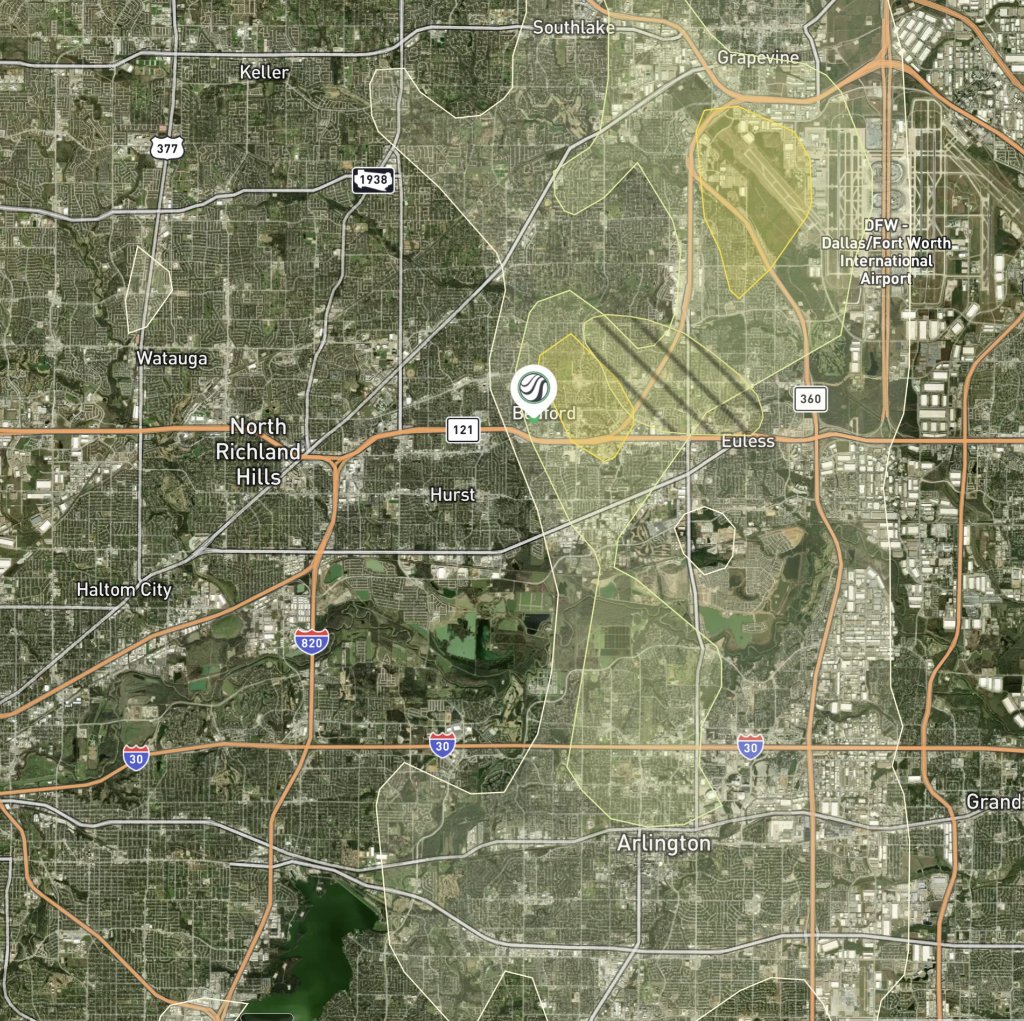
Lake Worth, Eagle Mountain, and Fort Worth Hail Damage Service Area
Becker Roofing and Exteriors focuses this hail damage roof repair work on the neighborhoods where storm leads matter most: Lake Worth, Eagle Mountain, Fort Worth, Saginaw, Northeast Tarrant County, and nearby DFW communities. After hail, wind, or heavy rain, our inspection looks for bruised shingles, missing granules, lifted tabs, damaged ridge caps, compromised flashing, dented vents, gutter damage, and leak paths that may not show up from the driveway.
If you are near Lake Worth, Eagle Mountain Lake, Marine Creek, Saginaw, Azle, Haslet, North Richland Hills, or Fort Worth and suspect storm damage, Becker can document the roof condition with photos, explain whether repair or replacement makes sense, and help you understand what should be included before an insurance adjuster inspection.
Need a hail damage roof inspection? Call 817-898-7175 or request a free inspection online.
Frequently Asked Questions
How do I know if my Lake Worth or Eagle Mountain roof has hail damage?
Look for granules in your gutters, dents in soft metals (AC fins, mailboxes, gutters), and any cracked, curled, or missing shingles. Many signs of hail damage are only visible up close during a professional roof walk. If you were in the path of any of the 2026 North Texas hail events, a free inspection is the most reliable first step.
Will my Texas homeowner’s insurance cover hail damage in Lake Worth or Eagle Mountain?
Most Texas homeowner’s policies cover wind and hail damage. Coverage depends on your specific policy, deductible structure, and the extent of documented damage. A photo-backed professional inspection report significantly strengthens your claim. Note that percentage-based deductibles (1–2% of dwelling coverage) are common in Texas — understand your deductible before filing.
How soon after a hailstorm should I get my Lake Worth or Eagle Mountain roof inspected?
As soon as possible. Texas generally allows up to two years to file a claim, but early documentation — before additional weather events, granule wash-off, or interior leaks develop — produces a stronger claim. The April 25-26, 2026 storms are still within the filing window for Lake Worth, Eagle Mountain, and Fort Worth homeowners who haven’t filed yet.
Can hail damage cause a roof leak even if I don’t see a hole?
Yes. Hail bruising can compromise a shingle’s structure without creating a visible hole. The weakened area often develops into a leak 6–24 months later, especially as thermal expansion and contraction work the compromised material. This is why professional inspection is more reliable than visual ground-level assessment.
What size hail causes damage in Lake Worth or Eagle Mountain?
Quarter-size hail (1 inch) and larger consistently causes damage to standard asphalt shingles — especially on roofs 10+ years old. Golf-ball (1.75″), baseball (2.75″), and tennis-ball (2.5–2.75″) hail causes severe damage to virtually all exposed surfaces. The April 25-26, 2026 storms included reports up to tennis-ball size in Lake Worth, Eagle Mountain, and Fort Worth County.
Does Becker Roofing and Exteriors offer free hail damage inspections in Lake Worth or Eagle Mountain?
Yes. Becker Roofing and Exteriors provides free, photo-documented hail damage inspections throughout Dallas and the DFW metroplex. Call 817-898-7175 or schedule your free inspection at brexteriors.com/request-an-inspection.
Written by: Sean Becker, Owner — Becker Roofing and Exteriors. Licensed roofing contractor serving Dallas and the DFW metroplex since 2018. TX License #03-0235.


